




Inti Raymi in Otavalo presents identity, dance and Andean spirituality
Inti Raymi in Otavalo presents identity, dance and Andean spirituality
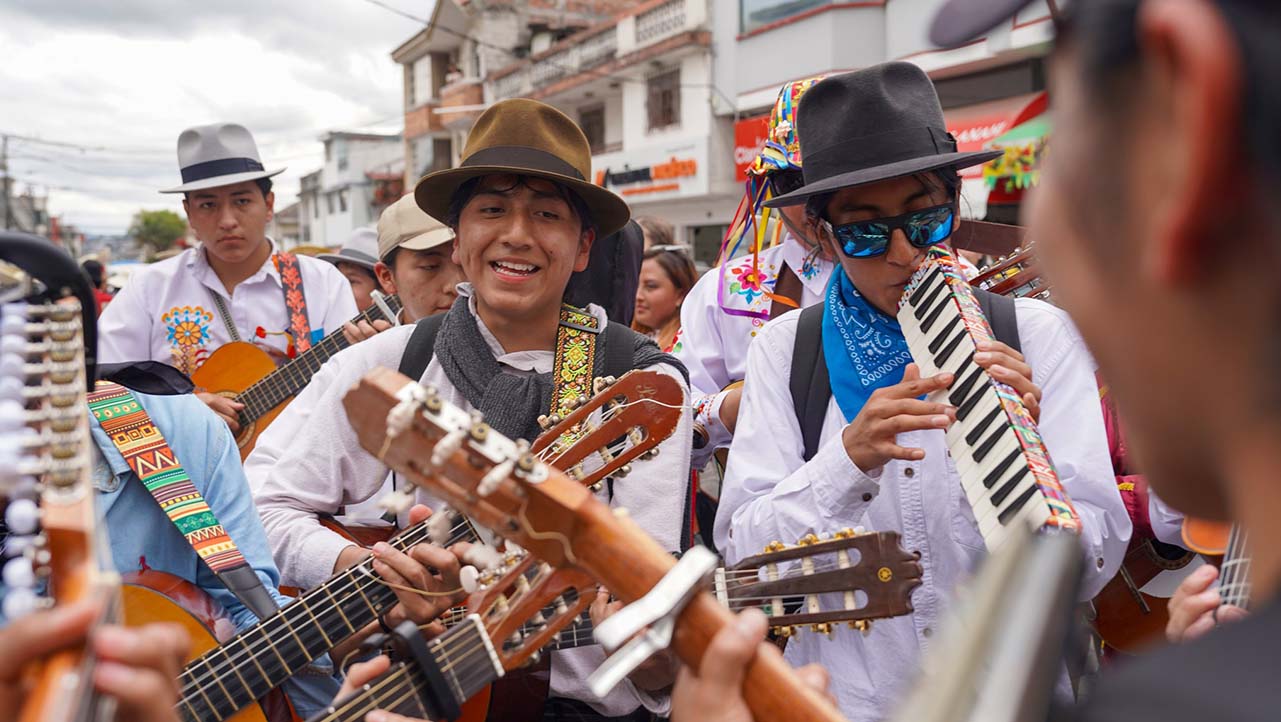
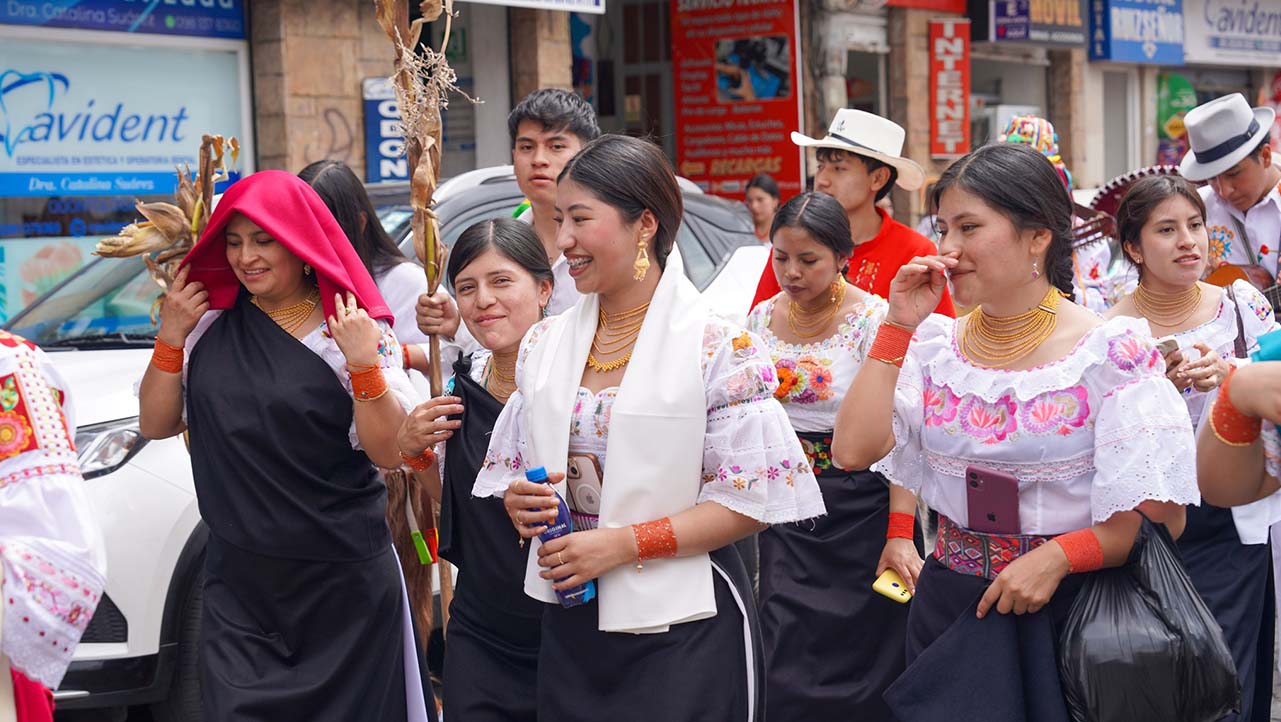
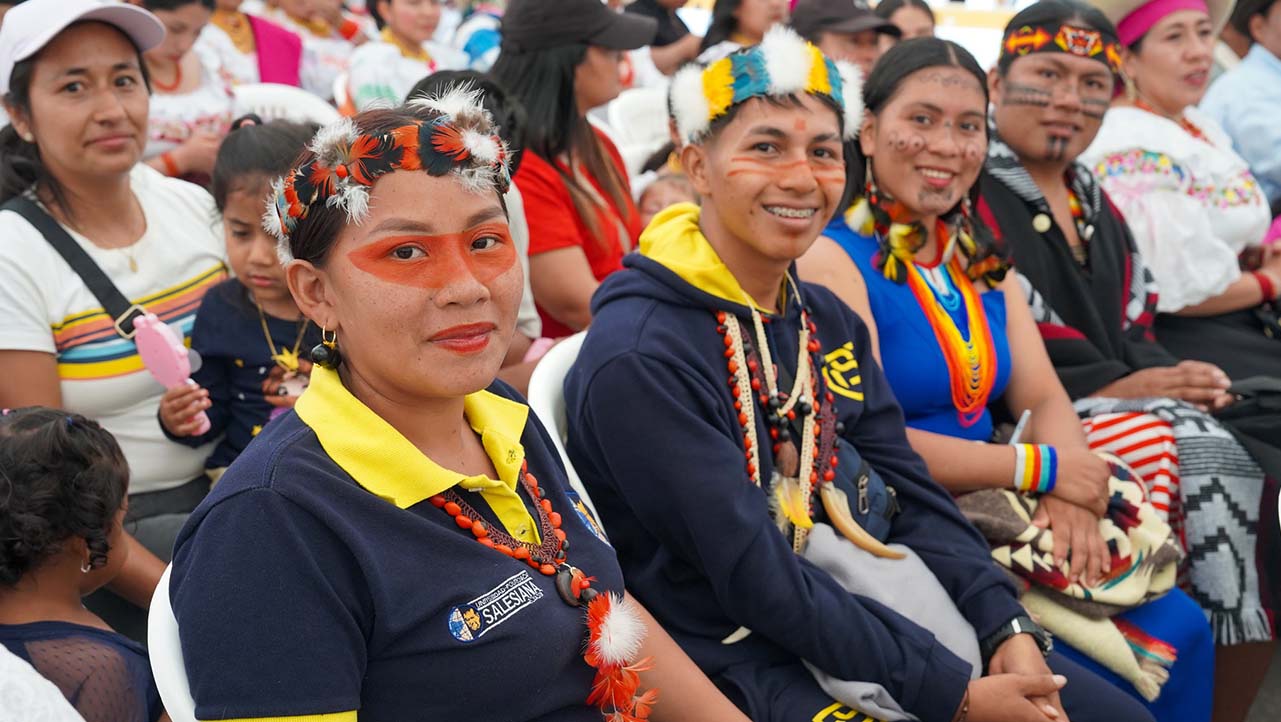
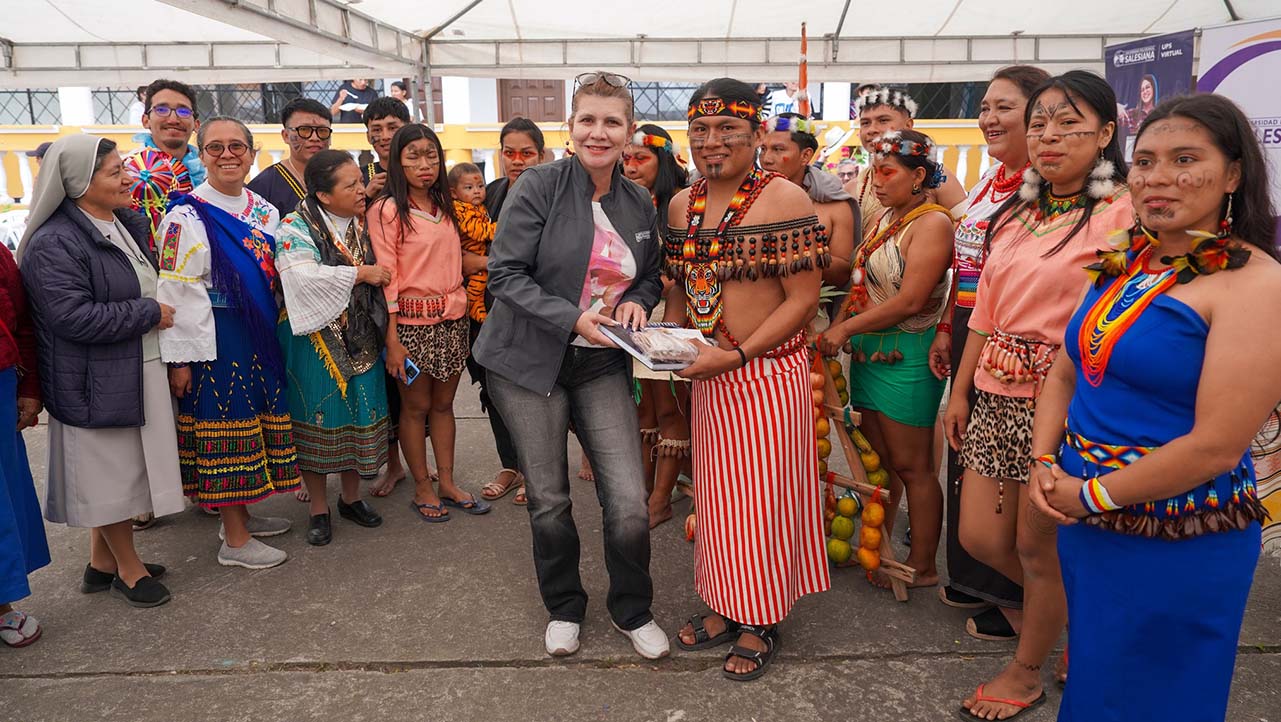
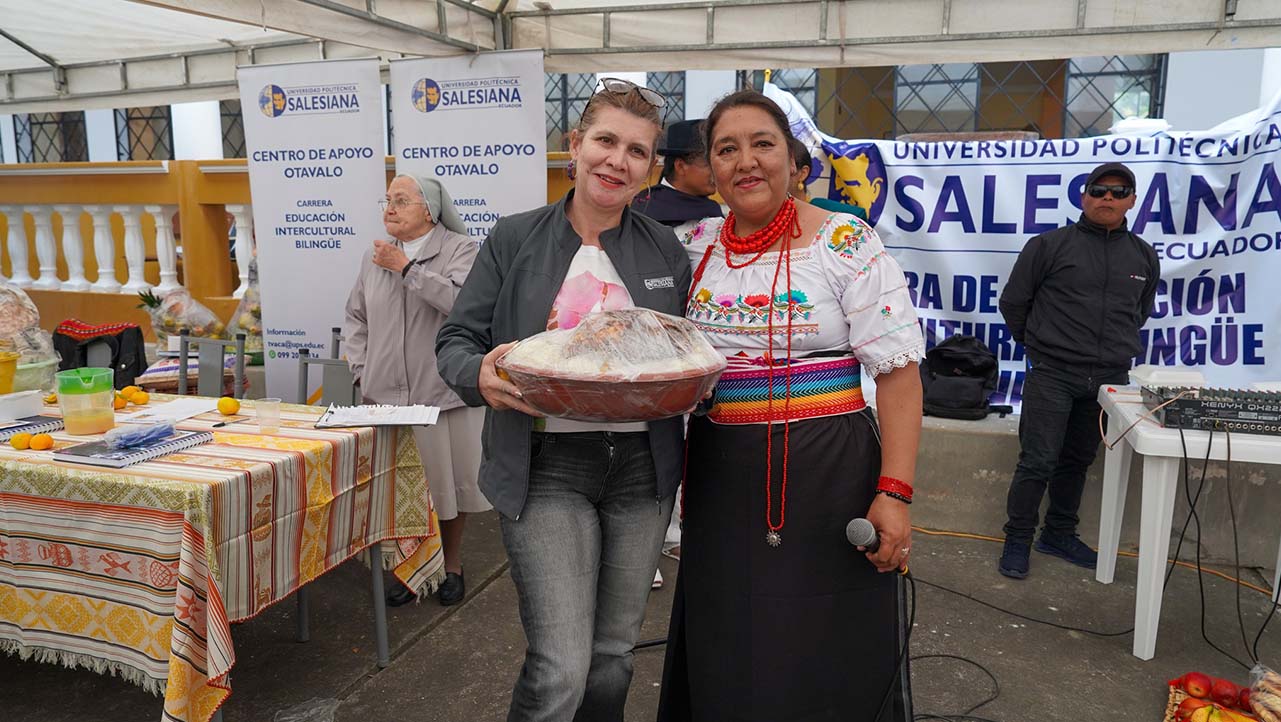
The Bilingual Intercultural Education major in our university celebrated Inti Raymi with an academic, cultural, and spiritual event at the Otavalo Support Center, featuring the 8th Intercultural Meeting "The Revitalization of Inti Raymi in Intercultural Education." The celebration began with a parade from San Juan Plaza to the support center, attended by students from Cayambe, the Northern Amazon, and the Northern Sierra. Six groups represented the Cotacachi, Shuar and Achuar, Imantag, Kayambi, Otavalo, and Natabuela nationalities, with traditional costumes, music, and dances.
Luis Montaluisa, UPS professor presented the talk: "The Experience of Inti Raymi in Education". "Inti Raymi and the Intercultural Curriculum" by Ariruma Kowii. "Rituals of Inti Raymi" by Sacha Rosero. During the opening of the event, María Sol Villagómez, vice president of our branch campus in Quito, stated that UPS seeks to "continue for bilingual intercultural education that represents all Ecuadorians."
They also held a dance festival to present the sociocultural and economic realities of the participating nationalities. It addressed topics such as the entry of oil companies into Amazonian territories, the celebration of Fruit Day, harvest and planting rituals, and the symbolic Cotacachi plaza. The jury was made up by María Sol Villagómez; Diana Ávila, director of the major; Guillermo Guato, professor; and a representative of Hermanas Marianitas de la Unidad Educativa Santa Marianita in Otavalo. First place went to the eighth-semester group from the Northern Amazon.
Teresa Vaca, a professor and coordinator of the Otavalo Support Center, stated that "the Bilingual Intercultural Education major is trying to rescue minority languages, promoting educational opportunities for residents of these nationalities through these types of events and discussions." Regarding student participation, she said: "This is the population that is strengthening this rescue in their communities and towns. Many of the students who have performed at this event are leaders in their communities." She also stressed that "the value of Inti Raymi lies not only in the artistic space but also in the spiritual connection of the communities with nature."
At the end of the event, the Cayambe Support Center, with the participation of the Nursing and Agricultural Engineering majors from our branch campus in Quito, announced that the Otavalo Support Center will be in charge the following year.
Dayana Albarrán, a fourth-semester student and representative of the Imantag community at the dance festival, said: “before performing we conducted in-depth research in the community of Imantag, where we were able to identify the double tap dance as a cultural characteristic of this community's dance.” She also explained the importance of an academic approach in these performances because “it allows for a differentiation and visibility of the characteristics, improving this cultural representation at Inti Raymi.”
Jeaneth Otavalo, student at the Otavalo Support Center, stated that “the celebration of Inti Raymi, from the Andean communities, is extremely important because it represents a reunion with nature, Mother Earth, and gratitude for food.” She said: “it is extremely important that these activities be revitalized within academia, since Andean celebrations are often thought of as purely indigenous and community activities. Therefore, the connection with academia creates a deeper visibility and allows for an initiative to use our clothing and connect with dance, music, and the Kichwa language.” Finally, she explained why she proud to be part of UPS: “I am very happy to be part of UPS and the Bilingual Intercultural Education major because it has created great opportunities and has allowed us to believe in the revitalization of the Andean communities through the teaching and training of children in the Kichwa language.”
This event demonstrates our university’s commitment to an education that values, highlights, and strengthens the cultural and linguistic richness of Ecuador's people, integrating ancestral knowledge with academic education
Noticias relacionadas
Noticias relacionadas


Follow us
Follow us