




Noticias UPS | Actualidad Universidad Politécnica Salesiana
Urban emissions and its effect on air quality
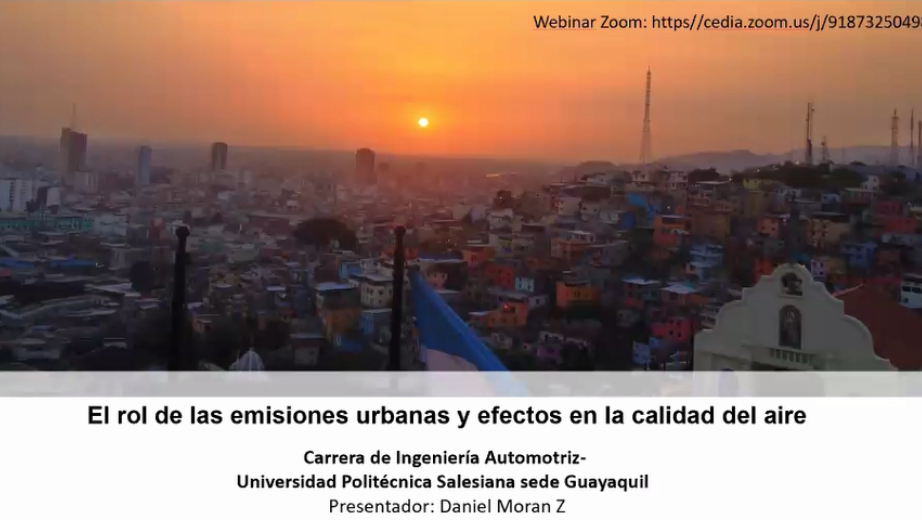
The automotive engineering undergraduate program in our branch campus in Guayaquil held the webinar "Urban emissions and its effect on air quality." The aim was to provide information for academic-scientific reinforcement in the automotive sector.
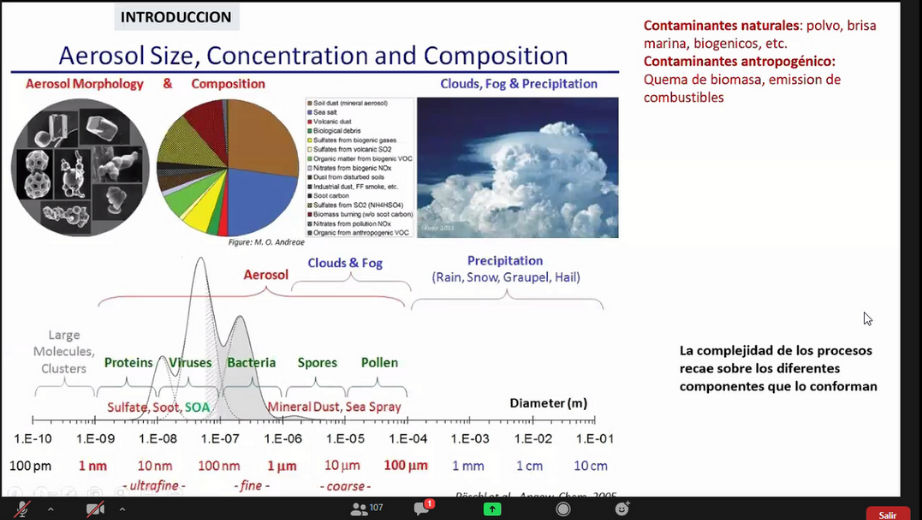
More than 100 people participated in the webinar, one of the speakers was Daniel Morán Zuloaga, Doctoral Candidate of the Faculty of Pharmaceutical Chemistry and Geology of the Johannes Guttenberg Mainz University in Germany; he spoke about his experience on types of aerosols, emissions and formations, types of combustion, environmental regulations, types of hydrocarbons, fuel cycles and recommendations to contribute to the reduction of aerosol emissions.
Aerosols can be of natural origin: dust, breeze, salts, biogenic (chemical elements that are part of living things) or anthropogenic (of human origin): emission of fuels, industrial gases, forest fires, garbage, greenhouse gases, and others.
According to the expert, the natural and anthropogenic combustion process undergoes physical and chemical transformation. Its components go through all the states of matter (solid, liquid and gaseous), when they rise into the atmosphere and combine with clouds, they form certain components that can be harmful or beneficial to the ecosystem depending on the origin of the combustion.
Emissions of polycyclic aromatic hydrocarbons (PAH) and reactive oxygen species (ROS) are produced In the combustion process of gasoline and diesel, gases which are harmful to health, called genotoxic because they remain in the environment and are highly toxic.
According to the Ecuadorian Ministry of the Environment, emissions of nitrogen dioxide, sulfur dioxide, particulate material with a diameter less than 10 microns and 2.5 microns, carbon monoxide and ozone are regulated. However, in Ecuador, there is little research on emissions of nitrogen dioxide and sulfur dioxide, the most polluting aerosols emitted by industry, and combustion vehicles.
Under international standards, the level of diesel and gasoline contamination is relative. In the European Union (EU) they have quality standards of diesel "Level 6" that is more friendly to the environment. The diesel produced in Ecuador is "Level 3", of poor quality and therefore has a greater impact on air quality.
To reduce polluting aerosols in the air produced by combustion, Morán recommends "reducing or eliminating the use of combustion vehicles (gasoline, diesel, and hybrids) and use electric vehicles and encourage urban cycling, accompanied by public policies so that walking or cycling is safe. "
During the confinement by Covid-19, urban dust levels decreased significantly and pollution levels fell globally, but as cities are reactivated, pollution rates grow again, "the important thing is to be aware of what kind of vehicle we have and use it as little as possible ", stated Morán
Noticias Relacionadas
Noticias Relacionadas


Follow us
Follow us